On Star Wars and the Baby Boomers
It was recently announced that John Williams will compose the music for Star Wars: Episode VII. This is great news for fans of his music all over the world, and it could be great news for smart orchestras too. A new Star Wars movie is the sort of cultural event that has largely untapped possibilities for modern orchestras. Too often orchestras ignore things like movie openings, or video game releases, but these occasions offer them opportunities to both appeal to a broader base of people and to reconnect with corporate giving. In this example, why not premiere new music from Episode VII at a symphony concert? The premiere could be at the same time that the movie debuts, or better still, why not premiere the music just before the movie comes out? The obvious idea is John Williams conducting, but why not Michael Tilson Thomas, Alan Gilbert, or Gustavo Dudamel? Why not aspire for all these maestro’s to work together and premiere the music on the same night in different cities?
Thoughtful and intelligent people will certainly disagree about their own tastes in the various genres of symphonic music, but there’s no reason for the institution of the symphony orchestra to swim upstream against market forces. The fact is that the music that traditionalists call “Pops” has to be more of the focus of serious orchestras’ overall seasons.
Traditionalists regard this idea as diminishment, and that’s understandable — Pops programming at too many orchestras seems dictated not by an artistic or musical goal, but rather by whatever is available from the back of Symphony magazine. These pre-fab “Pops” programs — they often come complete with a conductor — are an easy out for orchestras who are unused to thinking about film or video game music as seriously as they might consider their classical fare. There’s nothing inherently wrong with pre-fab concerts, but does renting the same Pixar live-to-projection concert that’s showing in every major city in the country really help to distinguish your orchestra artistically? And that begs the chilling question, if profitable pre-fab concerts can be rented by anyone then why especially does it need to be the local orchestra?
A valid criticism of certain kinds of “Pops” programming is that the orchestra itself can too often be reduced to being a back-up band. This of course defeats the purpose of getting an audience to a concert in the first place, and it’s often withering and burdensome for players. Yet, it is important to notice that this situation doesn’t come from playing worthy film and video game music. It comes from programming material that is not part of the symphonic tradition. An orchestra performing arrangements of rock songs, for example, is a frustrating exercise for everybody. There is very little connection from the Beatles to Beethoven, or Dylan to Dvorak. There is even less connecting the symphony with the circus.
Film music such as Star Wars, on the other hand, deeply relates to the symphonic tradition. It is written specifically for the symphony orchestra by a composer who is part of a tradition that goes back through Waxman, Steiner, Herrmann, and Newman. This music’s DNA comes out of Korngold, Mahler, and Wagner. And just because traditionalists do not support film music as much as other modern forms, such as dodecaphony, this doesn’t make our American tradition of film music any less real or influential on today’s audience.
Performing film music doesn’t require a movie screen, or a lights show. You can just play the music.
Also, practically speaking, is it any more worthy of an orchestras’ time and capital to seek out and commission music from Adès? Or Rouse? Or Lindberg? Do these composers bring in a new audience or donations? Are the resulting pieces somehow more worthy as art than new music from Mr. Williams? OrUematsu? Or Wintory? Which composers’ music do you suppose will create buzz and sell tickets next season? That ought to matter.
Orchestras should aspire to be curators of all genres of symphonic music, and lend their prestige to composers whose work will both enrich the audience and the art form. They cannot afford to ignore worthy artists from the film and video game genres just because the Baby Boomers have shunned these genres in search of creating orchestras more like those in Europe. These are, after all, distinctly American symphonic genres and American orchestras should be celebrating them. They are also, not inconsequentially, relevant and popular.
Of course orchestras could also do nothing, and simply wait for the Star Wars: Episode VII Suite to appear. But, by waiting they lose the chance to engage with a new and younger audience for whom this music is a cultural benchmark. That audience will not attend the concert two years later when the orchestra finally buys the suite of excerpts and has a “movie night.” Our culture moves faster now, and orchestras need to move much faster too.
Sure, there are hurdles to thinking about the now. Who knows how Mr. Williams (much less Disney) feels about the notion of even a part of a film’s music being played before the film itself is released, but asking these questions is the direction of artistic leadership that orchestras need. They should be seeking symphonic music that matters to more people, and that means playing and premiering new film and video game music. And in the end, there is a lot more room for growth exploring these genres than there is in hoping for changes in the educational system, the NEA, and the American culture.
It doesn’t matter if the snobs call it art or kitsch. The music and its fans don’t need the traditionalists’ approval, but our American orchestras surely need those fans.
No Time At All
Just like Rip Van Winkle, American orchestras have been asleep for twenty years. Season after season of the same repertoire, played again and again for generations until the idea of an orchestra participating in modern musical life seems outrageous. Last week, the League of American Orchestras focused their annual conference around the idea of “Imagining Orchestras in 2023.” You see, orchestras have at last begun waking up — and they do not know where their audience went. Yet in an industry where many orchestras are already planning their 2018 season, 2023 is not so far away. If American orchestras continue to deem change as something that happens at a pace that can be measured in decades they will lose even more market share, and they will suffer further diminished artistic relevancy. After all, even when an orchestra actually does something new it is perceived as a single event, rather than a new approach to presenting art. Worse, by waiting to change the dogma surrounding their repertoire and presentation they soon will lose an important generation of potential audience members, the Millennials.
That’s a pity, because there is no reason to suspect that the appeal and popularity of orchestras, and large form symphonic music, cannot be increased to considerably larger demographics. After all, we are speaking about an industry where one-thousand unit sales constitutes a major classical record. One-thousand people. And it’s worth noticing that while the share of classical records in the market is perhaps 3%, maybe less, in 1997 the Titanic soundtrack (an orchestral film score) was released as a classical album and that single record amounted to 12% of the total business in the classical sector for that particular year. American orchestras should have rushed to play that music on their regular subscription concerts — perhaps with other music from 1910, or a sea-themed concert, or even simply a James Horner evening with a little Shostakovich. However, predictably all most orchestras learned from the massive popularity of that album of orchestral music was that they must be sure never to program that sort of music, people might come to the concert.
If this were politics, then from a programming perspective American symphony orchestras are run by the Tea Party — the most conservative of musical minds. Yet, the market tells us that orchestras need to program more diverse music, now, and do it from a place of artistic cohesion. After all, people don’t know what they want until you give it to them. Just ask Apple. It has been said that orchestras are like giant ships that can only change direction slowly. That may be, but much of the change needed is simply pragmatically changing the presentation of current repertoire. Orchestras already play a range of genres, but too often they are segregated into various concert series, such as Classical and Pops, that divide and diminish both the development of the art form and the development of new audiences. Orchestras must begin programming all genres of symphonic music together, and in so doing make themselves a much larger part of American culture.
To that end, management cannot be solely responsible for the future of orchestras. A growing part of the solution requires orchestra musicians to expand their minds as artists. Knowing Bach, Beethoven, Brahms, and Berio is not enough anymore. Ignorance of popular culture is no longer acceptable for 21st century musicians, especially in regard to new orchestral music. It is already crazy that one has to explain Twitter to the proud luddites that populate many orchestras. Despite the existing orchestral culture that celebrates ignorance of technology as a point of honor, that ignorance is in fact a handicap. Everyone in the classical industry, especially orchestras, should embrace new technology just the same as they should embrace all of the new orchestral genres, like video game music. One can’t dream of the future if one only sees the past.
Happily there are examples of some orchestras who are stepping towards the light. The Pacific Symphony has shown itself to be really creative, such as in this Thriller/Rite mashup. The Detroit Symphony continues to blaze a trail for others with online streaming of concerts, including interesting commentary and interviews. The Brooklyn Philharmonic’s latest concert, with Erykah Badu, was so popular that an additional performance had to be added.
Still, most American orchestras lag far behind even these first steps. Had they been more inclusive, and interested in the culture they inhabit, this transition would seem less abrupt. However, the many great orchestras of the U.S. have been asleep for a long time, and the modern audience has higher expectations than ever before. And importantly, orchestras need a larger audience than ever before. So let us not look to 2023 to imagine what orchestras will be like, let’s look at right now. This season. There is no time to wait. In fact, there’s no time at all.
Modern Times
Half of the fun of watching Mad Men is observing how dramatically American society has changed since the 1960’s. The characters’ constant drinking and homophobia make us blush, and we notice how far attitudes have shifted towards everything from smoking to sexism. Our lives in America have changed so thoroughly since then that looking back just fifty years seems to be another age.
During those same fifty years, the audience for orchestras have trended towards the geriatric. Industry leaders have felt little urgency towards appealing to the young — mostly due to an insidious industry myth that the population would “mature” into classical music fans. It turns out that that idea was based on ignorance. Ask any orchestra’s development department.
Appealing to the young is no longer optional for orchestras. The fact is that Millennials are a really big deal, and orchestras must shift their focus to this younger generation. For those of you playing at home, here is a Millennial named Colleen Dilenschneider succinctly laying down the facts:
Millennials – those roughly between the ages of 21 and 35 – represent the single largest generation in human history. Come 2015, Millennials will have more buying power than Baby Boomers, and then this massive demographic will have a stronghold on the market for the following forty years at minimum. Thanks in large part to the web and social media connectivity, we function and think very differently than the generations that came before us. Nonprofit organizations that are not targeting this population right now in terms of building affinity and creating personal connections may find themselves suddenly irrelevant within the next decade.
Naturally, shifting priorities towards Millennials is a foundational transitional shift, and part of that shift must be managing the expectations of the current Boomer donors. Current donors love for orchestras and symphonic music is important and valuable, and it is also important that orchestras continue to be strong institutions that can do their work into the future. After all, the future audience has no advocate, and without that audience there is no future for orchestras in America. Boomers need to be persuaded that they are giving to orchestras in order to secure the life and legacy of the institution — even if they don’t like the direction that symphonic music has taken in America.
The goal of reform is not as far off as it may seem because most new kinds of symphonic music are already covered in many orchestras existing mission statements. In fact, many American orchestras do not use the term “classical” at all in their mission statements, and this is good news. Limiting an orchestra’s mission to “classical” symphonic music stifles its future, and makes it that much more difficult to transition the organization towards relevance to this new generation of Americans. After all, the market and the internet have already decided (like it or not) that video game music, film music, and Broadway are a large and growing part of what most people think of as “symphonic” music. If orchestras want a Millennial audience, and their donations, then these genres need to be more a part of what an audience will hear in the concert hall, especially on regular subscription concerts.
Everyone needs classical musicians to embrace these developments, and college and conservatory orchestras can do a lot more to prepare players for the realities of the market. At the moment, too many schools continue to prepare students as if they will graduate to play in orchestras from the 1950′s. They are not only doing a disservice to their students, they are also contributing to the marginalization of orchestras by creating generations of musicians who do not yet speak the language of their own culture.
American orchestras can change their focus and have a say in their collective destiny, or they can do nothing and wait to see what the market brings — like in Minneapolis. These are very real trends, and whatever the outcome in Minneapolis, no amount of restructuring can save our orchestras if their focus and their artistic product continue to ignore the culture they inhabit.
Big Tent Thinking
History is filled with people who have tried to define art. They have all been wrong, and there is no reason to suspect we are any better at it than they were. Changes to what experts call “Art” happen all the time. There was a time when people qu...
History is filled with people who have tried to define art. They have all been wrong, and there is no reason to suspect we are any better at it than they were.
Changes to what experts call “Art” happen all the time. There was a time when people questioned whether photography constituted fine art. Some used to ask the same question about Andy Warhol, and today it’s Murakami. These days film-makers such as Tim Burton are routinely presented as serious artists by mainstream museums. The Smithsonian Museum exhibits video games as fine art, and video games are now part of the permanent collection at MOMA. The New York Times has given them a distinct category in the Arts section.
Museums and others are taking popular culture seriously. Orchestras should follow their lead and program repertory from film, broadway, and video games alongside traditional classical and modern music. Like museums, orchestras should treat all symphonic genres as interesting and worthy American art.
The separation of genres is a damaging industry prejudice, and it is artistically unjustifiable. This conceit that they need to be separated into classical and “Pops” divides more than just an orchestra’s resources and their audience, it also divides advertising considerations, fundraising goals, mission statements, and priorities over hiring musicians and conductors. It even can divide an orchestra’s own name, like when the Boston Symphony magically morphs into the Boston Pops.
It is great news that the Minnesota Orchestra’s Sibelius recording was nominated for a Grammy — and that also makes it worth pointing out that there was another (new!) symphonic score nominated for a Grammy this year: the score to the video game Journey. While the Smithsonian, MOMA, The New York Times, and others treat video games as art, orchestras in America will likely ignore Austin Wintory’spopular new Grammy nominated symphonic score.
Perhaps someone will put it on a “Pops” concert?
Meanwhile, Time Warner Cable cut the TV channel Ovation from its lineup this week. Ovation was the only cable channel dedicated to Arts programming. It has been cut because it was one of their poorest performing networks. Three-quarters of its programming consisted of repeats of existing material. It was watched by less than 1% of customers, and it “costs too much relative to the value of service”.
Costing too much relative to value is a problem shared by orchestras, and so it is mystifying that no matter how marginalized they become, orchestras program concerts as if repeating existing material were the best way to boost attendance and donations. And apart from the money, is that even the best way to present art?
For those open to the new world, opportunities abound. The Cutting Edge Group announced this week that they have purchased the film soundtrack label Varése Sarabande for $100 million, and they intend to produce more than sixty soundtracks a year. The really interesting part is that they will make all the new orchestral scores available to be performed. They are not, however, doing this exclusively for the sake of art. To them, film music scores “are highly undervalued properties”.
Orchestras ought to come to the same conclusion.
Like global warming, these trends in the arts are obvious and they can be addressed. As the traditions of symphonic writing evolve, orchestras need to be partners with all kinds of living composers rather than reactionary judges. After all, no orchestra can seriously present people as artistically nuanced as Kurt Weill or Richard Rodney Bennett while at the same time disregarding so much of their compositional output.
Changes are coming. Musicians and management should acknowledge that whatever the new traditions turn out to be, they will challenge some deeply held artistic convictions. Innovation is needed in orchestras’ artistic thinking just as much as in finance or presentation. It is time for orchestras to stop repeating the same music each year, and curate concerts using the entire American repertory. It is better for the art form, and better for the bottom line.
The Riot Stuff
Orchestras should raise their voices to be heard amid the din of noisy modern culture and promote themselves as socially conscious public institutions. They need to embrace a more inclusive posture in society, and demonstrate an identity more nuan...
Orchestras should raise their voices to be heard amid the din of noisy modern culture and promote themselves as socially conscious public institutions. They need to embrace a more inclusive posture in society, and demonstrate an identity more nuanced than silent anonymous conservative tuxedo-clad white male. While the price of participating in American culture is that orchestras may be subjected to new kinds of public criticism, participation also brings new kinds of opportunities, such as appealing to Millennials and corporations — the people orchestras need for future funding.
An example of an opportunity to put a public face on artistic thought occurred in August when members of Pussy Riot were arrested in Moscow and sentenced to two years in prison for staging a protest against Vladimir Putin in an Orthodox cathedral. Everyone should have the right to peacefully protest their government. Sentencing a couple of girls to labor camp for two years for making a video obviously challenges these rights, yet no American orchestra or conductor said anything at all.
American classical musicians and orchestras could have, at the very least, announced that they supported the free speech of Pussy Riot. They could have even tweeted about it. Perhaps they didn’t respond because they do not see themselves as part of the international conversation, but their silence about it is exactly what excludes them. They left actual participation to other musicians and groups. While it may not be surprising that there was no word at all from Valery Gergiev, other musicians vocally participated in the discussion and supported Pussy Riot. People like Madonna, Sting, Yoko Ono, Björk, Moby, Peter Gabriel, and others. Relevant and active musicians. But not only musicians. Also participating were more than a dozen international papers as well as the Washington Post, the Chicago Tribune, and the New Yorker Magazine. The U.S. State Department openly deplored the needless severity of the punishment, and the White House stated that it had “serious concerns about the way that these young women have been treated by the Russian judicial system.” One would think that orchestras would want to be publicly on the side of freedom, especially in Washington D.C.
And where were the conductors? The orchestras? The American classical community? They were silent, because as far as they were concerned the whole affair had nothing to do with them. It is yet another way of separating themselves from present-day society, perhaps yet another way of continuing to fade into irrelevance.
Concerts can be an orchestra’s opportunity to establish itself as a public institution with a social consciousness. The meaning and message of the entire program or series could serve as commentary on larger contemporary common issues and experiences. Not even necessarily to express a stance, but to express awareness, so that the orchestra is a part of the piazza where citizens gather to engage in civil society rather than escape from it. So, for example, when an orchestra programs the Pastoral Symphony, performing it could both represent Beethoven’s portrait of serene country life and simultaneously comment on a shared social issue, such as global warming. That is putting art in context.
Orchestras have to stand for something. They must aspire to elevate humanity through music. Orchestras and classical musicians can’t just be the arts world’s separate and silent partner. You use the music to show our commonality as Americans. The humans sitting in the hall tonight. They have an experience in common, the experience of living in this nation in this decade. Address it.
Orchestras need musical and administrative leaders who respect and understand the language of contemporary artistic culture, and that it is a public conversation. That’s how you approach presentation and programming. For example, an American orchestra could have joined with much of the western world and denounced the goings-on in Moscow. Then they could have performed a program with music to that position, say a Shostakovich symphony and a concert suite from the new movie Lincoln. This would be a great time to ask the resident composer to compose something, and fast.
By contributing no comment at all to the discussion, orchestras and conductors are invisible to the national cultural conscience. And they need a voice if they are going to secure sufficient funding from Millennials and corporations.
Orchestras have to program concerts with the actual listeners in mind, and stop trying to make some sort of academic point about long-dead composers that few in the audience can readily relate to. These people’s lives are a constant stream of passionate thoughts about their daily experiences and the experiences of others. Respect these lives. Become a part of them.
Beyond Prestige
In the American system, the arts are funded mostly through indirect subsidies. Our government’s tax policies toward charitable giving elicit billions of dollars in contributions annually. The beauty of this system is that it not only allows the ci...
In the American system, the arts are funded mostly through indirect subsidies. Our government’s tax policies toward charitable giving elicit billions of dollars in contributions annually. The beauty of this system is that it not only allows the citizens to determine which not-for-profits benefit a civil society, but also it does not require the government to determine exactly what constitutes “good” art. The citizens declare what is important to them culturally through donations to arts groups. This structure is not going to change, at least not for the next century.
Since orchestras rely on donations, they must become valuable to more people — or at least more people of means — in order to survive. The Baumol Effect causes orchestras’ labor costs to increase without regard to productivity. Just maintaining the status quo – much less growing – will always require more money this year than last year. But the orchestra’s cultural value is no longer apparent enough to inspire the donors to provide the necessary support.
This economic reality is a large factor in why the Detroit and Atlanta musicians have succumbed to a salary cut. They both happen to be in cities that have the money, but not the local will, to fund them at exponentially higher levels each season. Despite what some people seem to think, there really comes a point when you can’t raise any more money from local donors.
Orchestras in major cities have a better financial cushion because they operate in areas with a high concentration of people and wealth. They can ask new or existing donors for more money. But this is also why they are the slowest to change. And even when musicians do strike, as in Chicago, the conflict can be resolved without making the orchestra reexamine its value to the community, because the conflict takes place in a city that still has the individual wealth and/or community interest to address the situation.
The root of the problem in Minneapolis is that the area does not have this financial luxury. Their musicians may deserve more money than the orchestras are able to pay. So something else has to give. The orchestras must reexamine their value to their communities. It’s no longer just about prestige. It’s about service.
There is enough money in the charitable pool of Minneapolis to fund both the Minnesota Orchestra and the St. Paul Chamber Orchestra, but it’s difficult to persuade donors to annually increase their donations. It is considerably easier for a board to raise $50 million for a new lobby than for operating expenses. A new lobby is will elevate and delight the audience for many years without demanding exponentially more money each year. If the orchestras are not inspiring the donors to fund the artistic contributions as readily as they fund a new lobby, then perhaps the orchestras are not contributing as much as they think they are.
There are some who say this is all largely an arts management crisis, and while it’s certainly likely that there has been mismanagement in some cases, there’s certainly not enough to create and sustain these statistics. And some managements have been doing good work. The Detroit Symphony, led by Anne Parsons, has not only invented and expanded cost effective concert streaming, they have surpassed their annual fundraising goal, which was higher than it was in 2010, and they are touring to Carnegie Hall twice this season. The people who claim that there is no arts crisis, that this is part of a cycle, that the concert audience was always old, that people will grow into donating to the symphony – these people no longer need to be taken seriously. They are the climate-change deniers of the classical music industry. The crisis facing the orchestral world is not, by and large, managerial.
The main crisis is artistic. And donors are looking for ideas from the musicians because they are the artists.
Orchestras have resisted reform for generations, almost always under the banner of protecting their artistic standards. The fact that modern generations would rather hear the symphonic music they love on iTunes than regularly attend a live concert is the symphony’s fault, not their audience’s.
Orchestras must find inventive ways to be valuable to their communities. This means more than simply creating youth orchestras around the symphony. It could mean that all of the musicians teach in local schools every week of the school year. Rehearsals and auditions could be opened to the public. The orchestra could partner with other local cultural groups such as museums, dance companies, theaters, and visual artists. The music director should conduct the “pops” programs as well as the children’s concerts, as Ormandy and Stokowski used to do. And the conductor should be in town for more than half of the year, visibly helming the proof of the orchestra’s importance to the city.
This difficult situation is not unique to Minneapolis. Many American orchestras are at this crossroads. Unfortunately for musicians, the symphony orchestra must prove its value much more widely than it seems able to. Until it does, many musicians will have to accept pay cuts.
Who's Afraid of Popular Culture?
A recent missed opportunity for orchestras in New York City came in late October in the form of Comic Con. The New York Comic Con is an annual New York City fan convention dedicated to comics, graphic novels, anime, manga, video games, toys, movie...
A recent missed opportunity for orchestras in New York City came in late October in the form of Comic Con. The New York Comic Con is an annual New York City fan convention dedicated to comics, graphic novels, anime, manga, video games, toys, movies, and television. Comic Con is an event that brings more than 100,000 people in to the city who spend upwards of $65 million dollars over a three-day period.
This potential orchestra audience is left unconsidered because the symphonic music that they love is still ghettoized by the classical establishment. The music that they love is symphonic film music and video game music.
It’s difficult to believe that all of New York's orchestras are so flush with cash and attention that they cannot be bothered to offer a couple concerts for 100,000 people spending $65 million dollars on “entertainment” one weekend a year. The classical industry’s myopic artistic worldview excludes most orchestral music from popular culture. Naturally, it also excludes legions of potential new audience members, many of whom have never attended an orchestra concert before — all while leaving money on the table.
The solution, however, is not to program Pops concerts for the Comic Con audience. That’s actually a dangerous and disingenuous strategy. If the symphony offers the Comic Con audience symphonic film and video game music but does so cynically, as in a pops concert, then the symphony suggests to that audience that the music that they love isn't to be taken seriously.
If the classical industry can't take popular American symphonic music seriously, then they cannot expect these audiences to ever take an interest in classical or modern music — much less in violin lessons. And when some of these new audience members actually return to the symphony and they are presented with Mahler or Sibelius, their context for hearing that music should be the same as is was when they heard Uematsu.
The symphony exists — or ought to — to express all kinds of symphonic art. And after all isn't that what a symphony does — curate symphonic art? It shouldn’t have to change or rename itself to present different genres of symphonic music.
Orchestras should offer classical-style concerts (curated music) that include non-traditional genres like film music, video game music, and Broadway. The symphony should regard them all as relevant art, and offer concerts curating them all together.
Here are two programming examples: Eternal Stories, and Too Popular.
Some traditionalists denounce, or ignore, symphonic film music and video game music by labeling it as artistically unworthy. Yet, not all fine arts organizations share this attitude. Unlike the symphony, fine art museums openly present modern art of many kinds: from academic to popular. They create a space for the art to be seen, and they curate the presentation. All without censuring the possibilities of what "fine art" is exactly.
Let's not ignore the symphony’s alarming attendance figures. With attendance falling in every trackable demographic it seems foolhardy for the symphony to alienate so many people who just happen to love a genre of symphonic music that traditionalists have trouble taking seriously. Hasn’t anyone read about the Millennial’s?
The Millennial’s do not recognize a caste system for music. These days most people no longer look to critics for guidance or approval as to what constitutes art. The symphony shouldn't either, and it ignores this truth to its peril.
And, just for fun, what were New York orchestras actually offering the concert going public during Comic Con? The New York Philharmonic was playing a program of Nielsen and Tchaikovsky. The Orpheus Chamber Orchestra was doing a program that included Beethoven’s Symphony No. 5 which “mark[ed] an historic expansion of the Orpheus repertoire”, according to their website. That was mostly it for symphonic music in New York that weekend. It seems as if most New York symphony orchestras are comfortable ceding the entirety of this new audience, and their money, to touring groups.
The symphony cannot be a successful institution in the coming century while at the same time judging entire modern symphonic genres as artistically unworthy. It ought to take all music seriously because, even for the symphony, the audience is ultimately the once and future king.
Happily, Comic Con is an annual event. Hopefully plans will be made for next season by one of the orchestras here in New York. Perhaps we’ll go from watching Alan Gilbert play video games with Death – to the thrills of watching him conduct an orchestral suite from Final Fantasy.
Dark Days
From the New York Times: In its Wednesday edition, the Vatican newspaper L’Osservatore Romano commemorated two topical dates with full-page spreads: the 500th anniversary of the inauguration of the Sistine Chapel – which took place under Pope Juli...
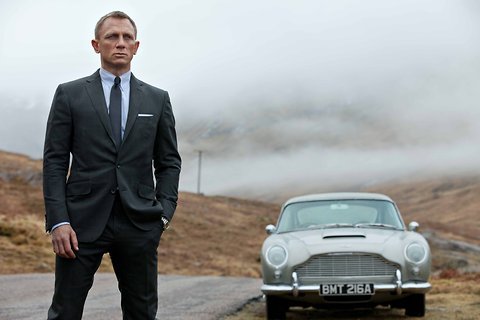
From the New York Times
In its Wednesday edition, the Vatican newspaper L’Osservatore Romano commemorated two topical dates with full-page spreads: the 500th anniversary of the inauguration of the Sistine Chapel – which took place under Pope Julius II on Oct. 31, 1512 — and the 50-year run of the James Bond franchise.
To honor James Bond is to recognize the character’s role in popular culture, said the paper’s editor in chief, Giovanni Maria Vian, adding that the newspaper’s mandate is “to pay attention to the cultural phenomena of our time,” whether comics, pop music or film. In recent years, the newspaper has commended popular favorites like the Blues Brothers and the Beatles’ “White Album.”
So even the Vatican (!) has honored James Bond and the occasion of his 50th anniversary.
Meanwhile, the Mariinsky Orchestra also offered a commemoration this week. Like so many others, theirs was of the 100-year anniversary of the premier of the Diaghilev ballet The Rite of Spring. The concert was, but for the hurricane, to be played in Carnegie Hall on Wednesday.
The Vatican's newspaper has a mandate to “pay attention to the cultural phenomena of our time” — that’s more than our classical music institutions do.
It is a dark day when the Vatican is more open to cultural phenomena than Carnegie Hall.
Separate but Equal
Orchestras should think with a larger artistic world-view — not simply because their very survival depends on their willingness to embrace artistic change, but mostly because that’s what serious artists do. Traditional classical programming has be...
Orchestras should think with a larger artistic world-view — not simply because their very survival depends on their willingness to embrace artistic change, but mostly because that’s what serious artists do.
Traditional classical programming has become de rigueur in American orchestras. It is a symptom of an old-fashioned world-view; one that sees orchestras as museums of so-called “high” culture. Aside from the red-herring of labeling anything “high” culture, this view limits the symphony’s potential as an art form, it’s popularity, and it’s ability to raise funds. Traditional programming invests in traditional donors at the expense of courting new ones. Ultimately, re-imagining symphonic programming is about expanding the expressive choices available to symphonies in every market. This means broadening our definition of what a symphony does and what constitutes good programming.
Programming should be unique in the context of individual markets. Across the country, most orchestras approach programming from the same perspective. They feel trapped in a Faustian programming bargain. They know change is needed to attract a new audience and new donors, but at the same time they worry that accepting change will alienate traditional donors. Still, where is the wisdom in investing exclusively in the tastes of the traditional audience when they increasingly do not meet the orchestra’s financial obligations? If these traditionalists wish to fund the symphony-museum, then they should donate more money.
Prestige still matters, but the artistic mission matters more. Orchestras don't offer a product; they offer an artistic experience. They offer a perspective. Programming choices reflect an artistic perspective, even a nationalistic one. The artistic mission, the aspiration, is what matters most now. Non-traditional programming helps orchestras invest in non-traditional donors, and can reflect a more expansive artistic mission for the entire organization. Many donors these days react to whether an organization is aspiring to positive social change. Organizations like The Bill and Melinda Gates Foundation, Warren Buffet’s The Giving Pledge, or Richard Branson’s Virgin Unite all seek to help people who have aspirations of societal benefit. Corporate giving also seeks to quantify the societal value of their donations.
Obviously, orchestras need to aspire to provide social benefit at the community level. One largely unexplored way to do so is to promote the rich and vast array of American symphonic musical genres, as well as our American conductors and soloists. Orchestras should celebrate America’s artistic contributions to the world — including film, broadway, and video game music. While remaining international in its tastes, the symphony should begin each day with a nationalist perspective. After all, most people are just not interested in a museum of German musical culture.
In programming, the choices available to orchestras are severely limited by the classical industry’s insistence that symphonic genres submit to a caste system. In the caste system bread-and-butter classical symphonic music is naturally the top caste, with places in the middle for New-York-Times-approved composers. At the bottom you will find the untouchables – movie music, Broadway, and video game music. A genre’s caste level is inversely proportional to its popularity in the larger culture — therefore, nothing can be both popular and “good” at the same time. This view reveals minds trapped in an old paradigm: That somehow there exists something called “great” music, then everything else.
The classical caste system largely ignores entire generations of American composers who’ve written for the symphony. It is no wonder the industry is feeling the effects of being cut off from the larger culture. Even though these composers, the untouchables, are among the most uniquely American of symphonic forms and some of the most popular and worthy American art, these artists and their contributions are currently moot in a discussion of programming with classical symphony orchestras.
This is not about adding another pops series or doing more pre-fab movie concerts; that’s old-paradigm thinking. This is about using all the available repertory together, on each and every concert, to make orchestras more vital and relevant artistic entities. Orchestras need to exercise much more flexibility about programming choices, even at the last moment. Choices made two seasons ago are often not as effective or relevant as new and current ideas. Can we imagine a world where the successful landing of the Mars rover Curiosity causes a symphony to change a concert to include a little Holst? Or even some Jerry Goldsmith?
This idea of "great" music is a particularly insidious view, because it allows some to believe that they are already offering "new" music on orchestra concerts. However, despite very honorable intentions, most classical institutions end up not promoting “new music,” but rather very particular styles of new music; New-York-Times-approved composers. This has been going on for so long that the audience doesn’t trust in the artistic decisions of the orchestra. Even when an organization is being truly adventurous, the audience has a Pavlovian response as it braces for the impact of the latest bad programming choice. The symphony has carefully taught its audience to loathe the new.
This caste system also limits whether a symphony can achieve meaningful musical experiences across a broad enough base of people who can fund its existence. With the current system, particular kinds of new music are meant for particular kinds of audiences. Classical subscription concerts are for traditionalists. Modern music concerts are for students and critics. Pops concerts are for other people. It’s as if orchestras do not want the various audiences to be in the same room at the same time.
This tacit snobbery is rotting the foundations of our American orchestras. Separate but equal is not the country that we aspire to be. Anyone from Erich Wolfgang Korngold to Howard Shore are mostly verboten everywhere but pops concerts. No matter that Korngold was thought of by Mahler, Strauss, and Puccini as a prodigy akin to Mendelssohn or Mozart. Or, that Shore's The Lord of the Rings symphony is a cultural touchstone that is routinely selling out concerts in very large venues. Doesn’t the symphony want those people too?
Because of this tacit snobbery, it needs to be said that it takes just as much knowledge of the untouchables as is does of traditional classical music to program these genres together. Too often the untouchables are programmed without regard to the original material. The majority of symphonic music from Broadway, films, and video games is a collaborative effort. Just like when programming classical music, programming untouchable music requires a deep knowledge of the original material. From there one can begin to edit, arrange, and orchestrate for a given concert. Pre-fab pops programming, orchestrations, and arrangements are often terrible. Many of the original works are remarkable, but they need thoughtful and insightful people to bring them to fruition for a symphony. That may mean a new arrangement, or using different sections from the original score, or even re-orchestrating for the available ensemble. Unfortunately for the music, and the audience, pre-fab untouchable music is mostly the norm. Even for many of the staff programming it, whether it is actually any good never enters the equation. They only know that the music often increases ticket sales. Where’s the artistic integrity in that?
Non-traditional programming should be challenging, but also fun to hear. It should challenge all listeners – not only the existing audience, musicians, and critics, but especially the very large audience who knows only that they don’t want to spend their time and money coming to a symphony concert. There are other benefits, like giving the musicians a kind of artistic rebirth. Rather than play the same eighty pieces year after year musicians will make better music (even classical music) because their musical experiences will be broader, requiring them to learn and understand new kinds of music and performance styles. Even before the financial crisis, symphony musicians have had record poor job satisfaction. They should welcome these opportunities that will allow them to be the creative, always learning, thriving artists we know them to be.
Challenging programs could mingle composers one never sees on the same program. Nico Muhly with Kurt Weill and Bernard Herrmann, or Franz Schubert with Adam Guettel and Gabriel Kahane, or Thomas Adés with Nobuo Uematsu and Ludwig van Beethoven. John Williams and Richard Strauss. Stephen Sondheim and Gustav Mahler. Here are two examples of complete programs, the winners of Spring for Music’s Fantasy Programming Contest, Eternal Stories and Too Popular.
By allowing American symphonic music under a bigger tent and dumping the caste system we could not only see the symphony and our place in American culture differently, we can also make the symphony into an engaging cultural entity. It could lead to programming that is interesting, popular, and truly challenging. It could create new corporate and donor possibilities, and give orchestras the inclusive creative energy that's been long absent from the concert hall. That would benefit everyone.
You say you want challenging programming. Try taking all of American symphonic music seriously. The audience already does.
Ritual
A ritual is the physicalization of a shared belief. A community of people perform rituals in order to reinforce their belief. In a Catholic Mass, it is not enough for the congregation to be told that Jesus died for their sins; they must also eat t...
A ritual is the physicalization of a shared belief. A community of people perform rituals in order to reinforce their belief. In a Catholic Mass, it is not enough for the congregation to be told that Jesus died for their sins; they must also eat the bread and drink the wine, representing the body and blood of Christ. This ritual reinforces their collective belief through acting out the story. The ritual is a reflection of the belief. Rituals of the concert hall reflect beliefs about the symphony. In the hall there are rituals of dress, of repertoire, and even of presentation. With each concert, they reinforce old ideas about the symphony, weighing down the symphony, and the music it plays, in long expired traditions. These traditions alienate most potential new audiences, and keep classical music at arms-length from the larger culture.
The current concert hall rituals are well known to all those who still go to the symphony. The constant parading on and off stage, the awkward unrehearsed bows, the anarchistic (and historically incorrect) rules surrounding applause are a few of them. The tuxedos, the convention-center lighting, the constant tuning; these are others. Every aspect of a concert is as scripted as any Catholic Mass, playing out the same way whether one is in Boise or Boston. Concert hall rituals are so ingrained in many peoples' thinking about the symphony that it is often difficult for them understand that these preconceptions can, and should, change. These traditions are not part of the "art", but rather they are vestiges of history. They hold on to symphonic concerts like barnacles to a boat, and should be scraped off before they sink the whole vessel.
Right now these rituals are almost always upheld, even when they are detrimental to the best presentation of the music. For example, recently the New York Philharmonic programmed a premier of Thomas Adés’ piano concerto. Just after intermission, as the audience took their seats, Alan Gilbert, the conductor, and Thomas Adés, the composer and soloist, walked onto stage together to much applause. Each of them took a microphone and together they spoke casually about the piece. The audience clearly enjoyed the interaction and the energy of the room warmed in anticipation of this new piece. After hearing about the compositional process, and Eden, and stars, the audience was eager to hear the music. It was perfect time to begin playing.
However, at this delicate moment the rituals of the hall succeeded in being more important than intelligent presentation.
The talk had built up audience anticipation of the premiere. Rather than simply begin, Gilbert told the everyone that they both would “be right back”. They put down their microphones and left the stage, departing to a smattering of applause, but it died before they made it off-stage. In the minutes that followed, silence ruled the hall. Then, as ritual demanded, out came the concert-master; complete with awkward bowing, predictable lighting changes, tepid applause, and yet more tuning. Again, silence in the hall. Then Gilbert and Adés made another entrance. By this time the ritual of entrances and exits and tuning had robbed the hall of the energy built up from intermission and the composer/conductor talk.
At this unfortunate and inopportune moment; where the audience could barely be bothered to applaud for the soloists second entrance, this is when the music started. The rituals of the hall made it so that rather than capitalizing on the anticipation of hearing a new work, the audience was bored just as the piece was starting.
The rules surrounding applause, particularly, reinforce old ideas about classical music. Recently, I had the opportunity to see the Emerson Quartet at Disney Hall, in Los Angeles. Moments after the first movement of the Mozart Flute Quartet ended, pockets of the audience ignored the ritual of silence between movements and burst into enthusiastic applause (which Mozart would have loved). Other concert goers were visibly surprised, but they politely endured. However, after the next movement many of the audience applauded again. And again after the following movement. After each movement, with each breech of protocol, the traditionalists got more comfortable staring and openly scowling at those applauding.
At intermission, exiting the hall, I overheard a conversation; A man who had been among the outraged regulars had pulled aside a women, a stranger, and he was lecturing her on concert hall etiquette. The words “not a circus”, “disturbing”, and “rude” were used to describe her behavior. She was embarrassed, and I intervened and offered the man a lecture of my own. Unfortunately, it remains common at classical music concerts for members of the audience to be treated as if they were unsophisticated, simply for reacting to the music. And why shouldn't the audience react? In every other art form, the lighting and the performers make it clear when to applaud. In classical music, you either know or you don't. You are an educated person of taste, an elite, or you are a rube.
It is worth pointing out that even at this concert, with the Emerson String Quartet, James Galway, and a premiere of a new quartet by Thomas Adés; the hall still was not sold-out. Not even close.
A large problem created by these old concert hall rituals is that they imply institutional support of elitism and snobbery. This belief has defined the classical music for a century, with the support of musicians and the symphony. It has been used to hawk various luxury products from cars, to annuities, to mustard. The symphony should stop marketing itself as a refuge for elitism and snobbery. Changing the rituals of the hall is the best place to start the reform. After all, does a symphony really cease to be a symphony if there are no tuxedos?
Obviously, it does not serve the collective good of the industry to alienate new audience members. It's difficult enough to get people into the hall, and it helps no one to make them regret attending. The rituals of the hall reflect its culture, and it is a culture that needs to be changed. Not only for the health of the industry, but also for the sake of art.
The symphony is not a church, and the rituals of the hall are not sacred. They can be changed, and the symphony is an institution that needs to embrace change. It needs a more enlightened approach as to how it presents the art; the music. If we change the rituals of the concert hall, we can begin to change the symphony itself.
Hopes and Dreams
Ideas of symphonic reform must necessarily be pragmatic. Orchestras of any size are slow moving ships that are adverse to change. In calling for symphonies to change how and what they present, it is sometimes difficult to imagine how change could ...
Ideas of symphonic reform must necessarily be pragmatic. Orchestras of any size are slow moving ships that are adverse to change. In calling for symphonies to change how and what they present, it is sometimes difficult to imagine how change could actually manifest. There are two moments in the coming weeks that offer opportunity for change, moments that are pragmatic chances for reform.
The first opportunity comes from the Brooklyn Philharmonic. Like so many other orchestras, this group has had major budgetary issues. They haven’t performed in two seasons due to funding shortfalls. Wednesday they announced that they have hired Alan Pierson as the new artistic director of the group. Mr. Pierson is the artistic director of the contemporary music group Alarm Will Sound. One hopes that Mr. Pierson will use the chance of a fresh start to expand the repertoire of new music beyond the composers championed by the New York Times. This is also an opportunity to address how the symphony presents music. Maybe now is the time for the musicians, at last, to change out of the formal-wear? Perhaps hire a lighting designer? Addressing the antiquated concert protocol? The Brooklyn Philharmonic has a chance here to really try something new, something vital, something interesting. Let us hope that they attempt some sort of reform and resist the temptation to sell variations on the status quo. Change is not the enemy of art.
The other chance for change is the upcoming announcement of the New York Philharmonic’s 2011-2012 season. It is an opportunity for their music director, Alan Gilbert, to expand the range of what the symphony performs. An invitation to think more broadly and inclusively about repertoire and thus relevance. It’s a chance to get away from the same eighty pieces that symphony orchestras play year after year, and instead offer all kinds of new music. Music from film, Broadway, and video games should be played on the same concerts as art music and the standard repertory. This would elevate the entire organization. It would elevate the entire industry.
A new season is an opportunity to dream of possibilities. A chance to dream of reform that could help make the symphony matter to more people. It could be something small, like letting go of the tuxedo. Or something more substantial, like offering new unheard-of collaborations with other cultural institutions; for example it would have been inspired if the New York Philharmonic had played the music of Danny Elfman in partnership with MOMA’s (sold-out) Tim Burton exhibit.
At the very least, one hopes the new season will have something more imaginative than another season-ending semi-staged opera.
One or the Other
There was an article in the New York Times last week about the copious vacancies in the New York Philharmonic. An explanation was offered by its conductor Alan Gilbert, who said in a statement, “We’re looking for the best musicians, people with a ...
There was an article in the New York Times last week about the copious vacancies in the New York Philharmonic. An explanation was offered by its conductor Alan Gilbert, who said in a statement, “We’re looking for the best musicians, people with a human quality that makes them uniquely right for the New York Philharmonic.” According to the Philharmonic, it may take a long time to find these gems, but they are worth the wait as they bring to the table what cellist Brant Taylor (of the Chicago Symphony, which has 9 vacancies) calls “thinking, thoughtful musicians who are the whole package.” It appears that the level of musicianship required is integral to the orchestra, but extremely hard to find. Zarin Mehta, the Philharmonic’s president, is careful to point out that the vacancies are not the result of organizational cost savings strategies. Though he admits, “It happens that you do save money.” While the search goes on for permanent players, “We are fortunate that this is New York, and we have an awful lot of very good people out there.” The 12% vacancy rate at the Philharmonic is presented by the institution as a symptom of the difficulty in finding and acquiring these rare musicians. However, the abundance of very good people in New York City allows the Philharmonic to hire substitutes to fill in the vacant positions, and yet these players perform concerts at less than full pay. It is unclear why these substitutes are not of the quality required to persuade the orchestra to hire them as salaried members.
This question was further brought to a head recently by the experience of Erik Ralske. He is a french horn player who had been playing third horn in the Philharmonic, and he was the only finalist in its audition for principal horn. The Philharmonic chose to leave the chair open rather than hire him. Ralske went on to turn down an offer to be principal horn for the Los Angeles Philharmonic, deciding instead to join the Metropolitan Opera Orchestra, as principal horn. If Ralske has sufficient musicality for both the L.A. Philharmonic and the Met Opera to offer him their principal horn chairs (not to mention his years at the NY Phil), one wonders what exactly the New York Philharmonic is looking for. What makes one uniquely right for the Philharmonic, and why is that quality unimportant to these other top-tier groups?
It appears that it is either true that the Philharmonic is currently offering concerts that are musically 88% of what they ought to be, or the concerts are of world-class quality and it is choosing to keep the vacancies in order to save money. It is fallacious to argue that they can offer a top-of-the-line product and at the same time believe that the vacancies remain because of the scarcity of musicians “uniquely right for the New York Philharmonic.”
The Philharmonic is either making the fiscal decision not to hire while hiding that choice behind the fig leaf of artistic integrity, or they are offering concerts that are musically substandard. Perhaps tickets should be 12% off?

Sapped
The New York Times criticizes, in a review this week of the Korean Symphony Orchestra at Carnegie Hall, that “Momentum and continuity were sapped by applause between movements.” This is exactly the sort of traditionalist’s view that ruins the fun ...
The New York Times criticizes, in a review this week of the Korean Symphony Orchestra at Carnegie Hall, that “Momentum and continuity were sapped by applause between movements.” This is exactly the sort of traditionalist’s view that ruins the fun of going to a concert.
If a symphony orchestra does not want applause between movements, then it is the symphony’s responsibility to find a way to show the audience. Blaming the audience for reacting to the performance is the wrong answer, and it re-enforces the traditionalist delusion that the audience should know and follow the symphony’s rules of concert etiquette.
For example, the following is from the New York Philharmonic’s web site. There are similar pages on nearly all other symphony’s sites. Some are listed below.
When do I applaud?
There are two reasons to applaud at a New York Philharmonic concert: as a greeting, and to show appreciation. Just before the concert begins, the Orchestra members will all be seated on the stage, except for the Concertmaster – the violinist who sits in the first chair of the first row of the Orchestra. You applaud to greet the Concertmaster when he or she comes onstage. You applaud again a few moments later when the Conductor comes onstage. Any soloists who will be performing will usually come onstage with the Conductor; you applaud to greet the soloist or soloists as well. You do not applaud again until the end of each piece of music, to show your appreciation to the performers. Some longer pieces may have several sections, or movements, separated by a brief, silent pause. The audience does not applaud between movements of a piece. The program will list the movements in each piece, so you will know how many there are; applause is usually reserved for the end of the last movement.
Seriously expecting the audience to follow this laundry list of old etiquette is absurd. The world does not revolve around the symphony. The answers lay in changing the concert experience itself.
Lighting design can address this issue because it allows the orchestra to choose when applause happens. I personally think the symphony should let go of the tradition of silence between movements. Like coat-tails, it is an anachronism. Still, no matter where one wants applause, lighting design can show everyone when to applaud together. The modern audience is well-trained in reacting to lighting changes. Indeed, it is part of every other cultural event, except the symphony. Lighting can lead the audience without condescension. Then the symphony may remove from its web site the FAQ: When do I applaud?
Lighting, like music, is difficult to describe accurately in words. With subtle choices, a good lighting designer can achieve an enriching concert experience without pulling focus from the orchestra, and at the same time make the concert more fun for the audience. This is a simple change that can make the concert experience better for everyone, and it can be implemented immediately.

Show Me the Money
It is worth noticing that the desire for ideas to address the symphony’s problems comes almost exclusively from its shortage of funding. Traditionalists in the symphony would ideally like to solve the money problem, while maintaining the status qu...
It is worth noticing that the desire for ideas to address the symphony’s problems comes almost exclusively from its shortage of funding. Traditionalists in the symphony would ideally like to solve the money problem, while maintaining the status quo. When the budget is balanced, few of them notice the artistic stagnation. The symphony needs to think bigger. The goal of change needs to be more than producing short-term economic sustainability. The goal must be achieving cultural relevance. Relevance leads to funding. Without it, finding funding will always be limited to muddling through the latest financial crisis. It has been so long since the symphony has had anything to do with the larger American culture that it is easy to accuse those asking for relevance of selling out. Attempts to widen the symphony’s scope are viewed by traditionalists as diminishing the Art. To them, concerts cannot be both serious and popular at the same time. The idea of changing how the symphony presents its concerts is offensive to them, because it concedes that the fault for irrelevancy rests on the symphony rather than on the audience. There are many models for how not-for-profit arts groups can fund their activities. In the United States, however, it is pie-in-the-sky thinking to hope for substantial government funding. Government’s support fluctuates from year to year, but will never fully fund a symphony in America; nor can ticket sales, even at full capacity. The pragmatic truth is that the bulk of funding must come from private donors and foundations. Because it has modeled itself as a mausoleum rather than a performing arts institution, there are fewer private donors who are inclined to help maintain the symphony. The symphony’s funding problems existed long before the most recent financial crisis, and without change, these problems will continue into the future. It is therefore in the symphony’s own self-interest to become relevant to a larger audience in order to build a larger donor base. Relevance also gives something for the rest of the organization to work with. The marketing department will have content to sell. The board will have something tangible to point to in its search for funding. The organization itself will be more attractive to other new sources of collaboration. With the goal in mind of being artistically relevant, which is not completely unlike being popular, the orchestra needs to change how it presents Art. This would give the institution a stable base of support, and at the same time makes it matter to the audience, and thus the community. It is absurd to expect any sort of meaningful change in the public’s relationship with the symphony without actually changing something about the concerts. The concert experience itself, the thing that happens at eight o’clock on a Saturday night, is what needs to be examined. There are two aspects of the symphony’s concerts which should be addressed immediately: the concert hall traditions, and the repertoire. The symphony must make the experience of sitting and listening to long-form music as enjoyable and fulfilling as possible. Concerts need to take place in the present, not as an imitation of the past. For too long, concerts have been museums of expired traditions. The ritualistic bowing, the coat-tails, the awkward silences, the bad lighting: all these bad apples are barriers to the modern audience’s enjoyment of the music. The protocol of bowing, tuning, and applause should be updated and refined. Lighting should be used to better present the orchestra throughout the concert and to dictate updated protocol, like applause. The orchestra should wear modern clothing (such as suit and tie) and let go of the nineteenth-century evening wear. The symphonic music that is relevant to Americans is the very music that most symphonies refuse to present seriously: Film and Broadway music. This music is not only distinctly American music, it is also the symphonic music that speaks to the absent audience. And frankly, it is where the vast majority of living compositional talent lay. Composers are professionals, and the best go to places where they are well paid. Traditionalists may disapprove of the direction the symphonic art has gone (or, of collaborative art in general), but art does not need the establishment’s approval to grow and change. It continues as part of peoples’ lives whether the symphony plays it or not. Art does not wait for traditionalists to catch up, and neither will the audience. This is not to say that simply programming film music will address the myriad problems the symphony faces. However, creatively allowing this music to mingle with classical music, with Broadway music, modern music (art music), and video game music creates possibilities for programs that have both relevance and beauty. This, in combination with revising concert hall traditions, is how to start making symphonic concerts relevant in the twenty-first century. The audience no longer trusts the symphony’s artistic judgment. They must be won back and shown that the symphony can present Art that speaks to them without condescension. The social structures built around the symphony are only traditions. Saying that “we’ve always done it this way” is not an argument, it is an admission of fear. The symphony should be brave! Classical music is a top-down industry and a valid worry among smaller symphonies is that if they embrace meaningful change they will lose their artistic credibility among their peers, critics, and donors. Leadership needs to come from the major orchestras in order to lend credibility to a new direction. If a mid-level symphony starts wearing business suits, hires a lighting designer, reformats the concert, and offers more varied and popular repertoire, it is selling out. If the New York Philharmonic does it, it is the new direction of the art. We must learn to think with a larger world-view, and expect the artistic staff at the major orchestras to lead the way. Their stubborn inaction suffocates the entire industry.

The Symphony's Misconception
The unspoken truth behind why major American symphony orchestras have chronic funding shortfalls is that they have ceased giving concerts that interest and engage the modern audience. Some of those running the institutions know that change is need...
The unspoken truth behind why major American symphony orchestras have chronic funding shortfalls is that they have ceased giving concerts that interest and engage the modern audience. Some of those running the institutions know that change is needed, but often they run into resistance from more traditional-minded people. These traditionalists see the presentation of classical music as being the same thing as classical music itself. They feel that no real change can be made to the symphony’s concerts because they are trapped by this misunderstanding, which has become the dominant paradigm in American classical music. To them, the music should not only be played in a very specific way, but also presented in a very specific way. In this paradigm, when you change one, you change the other. This belief has led to a culture that is loath to change because they see the symphony orchestra’s artistic integrity wrapped up in how they present the music. The result is a kind of lecture-demonstration wrapped up in a concert experience from a century ago. The League of American Orchestras released a recent study showing that for more than twenty-five years attendance rates have been dropping in all demographics. Symphony orchestras have been searching for reasons why. After all, in the minds of the orchestras, they are playing some of the best music in the world. If the audience isn’t coming, or returning, then it must be because the audience does not understand this Great Music. This attitude gives us educational “outreach” programs, and the still-prevalent practice of blaming the absent audience for various sins, from not having the right kind of schooling, to having a too-short attention span. Currently most orchestras encourage their prospective attendees to study the program notes before coming to the hall. Lecture-demonstration, indeed. In the classical music industry, all change must begin at the biggest orchestras or it is not taken seriously anywhere. The similarities among most orchestras in the United States is no accident of history, but rather a result of the same traditionalist idea. They all play the same music, the same way, with the same soloists, all in the same outfits. Each of them frozen in time. All clinging to a concert protocol that alienates the audience and creates a social scene that makes neophytes flee. They are sadly unable to address any of this for fear of compromising the Art! It’s no wonder they all sound the same, and no wonder they have trouble attracting new donors. Still, those running the symphony can’t help but notice that people still go to certain kinds of symphonic concerts: pops concerts, symphonic broadway concerts, film score concerts, even video game music concerts. These concerts generally feature the same musicians, the same venues, the same formal wear. Yet these are very well attended, are often sold out, and serve as a large source of income for many classical symphonic organizations. Needing a way to explain this discrepancy in attendance and popularity from the classical concerts (and at the same time saving face), this world-view has developed a tenet: concerts can’t be both serious and popular at the same time. The symphony is rightfully proud of its musical heritage and the truly great music that it performs. Thinking in this paradigm however, the unfortunate idea of “serious” music presupposes that other music is necessarily somehow not serious. This has a limiting effect on what the symphony feels it can present without damaging its artistic standards. Popularity is the reason why film music and Broadway have no place in the symphony in this country. This music, because it is popular, is thought of as less than serious. And yet, this is some of the most American of all symphonic music. Entire generations know reams of symphonic film music, and would (and do) pay to hear it played live. It is great music, it is our music; but it is forbidden because of the limiting traditionalist paradigm. There is much more to letting go of this world-view than simply stemming the tide of decay. This is an opportunity to make symphony orchestras into viable artistic institutions with something relevant to offer. It is a chance to make concert-going fun and interesting. While no single change will address the carnage of the traditionalists, a few simple ideas can help to begin the healing. The formalities of bowing and applause can be updated. Lighting can be used to better present the orchestra and dictate updated concert protocol, like applause. The orchestra can wear modern clothing, such as a suit and tie. Even the simple choice to allow the symphony to play music from across a larger spectrum of the musical world has a much larger effect than providing more of an audience. A broader world view could set free the symphony from its strictures of presentation and protocol, allowing for new choices, galvanizing the audience, elevating even the things that don’t change. Perhaps even the Beethoven would sound better, as fresh air finally enters the dusty museum that is the classical symphony orchestra. The traditionalist patrons of the symphony orchestra are welcome to their walled gardens, so long as they can afford the upkeep. But when one sees the bottomless decline in attendance and donations, and the nearly complete cultural irrelevance of the symphony orchestra, perhaps it’s time that the traditionalists understand that change is not the enemy of Art.
